

SOC vs COC Containers: Differences, Costs, Advantages and How to Choose
Choosing the right container arrangement is an important decision for businesses involved in international shipping. Importers, exporters, manufacturers and freight forwarders must consider container availability, shipping costs, equipment requirements and the logistics arrangements involved in moving cargo between ports.
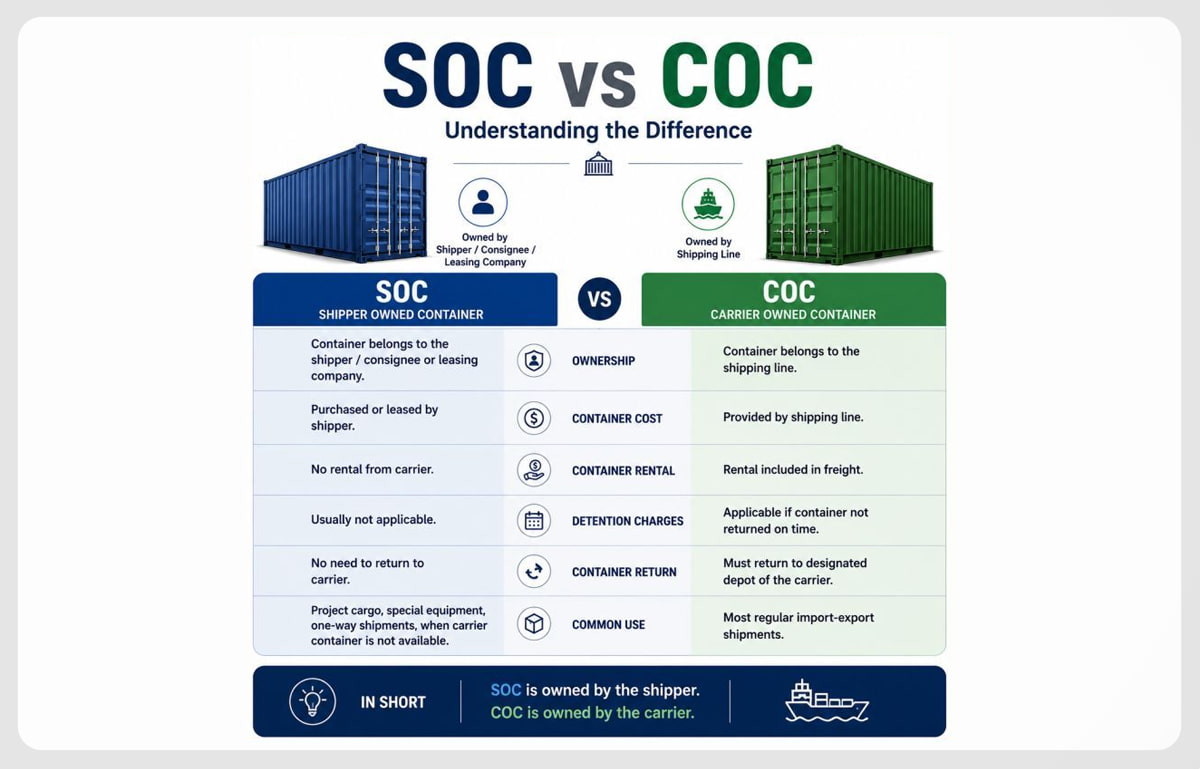
Two common terms in container shipping are SOC (Shipper-Owned Container) and COC (Carrier-Owned Container). Although both can be used to transport cargo by sea, they differ in container ownership, operational responsibilities and the costs that may apply to a shipment.
Understanding the difference between SOC and COC containers can help businesses evaluate their shipping options and plan international cargo movements more effectively.
In this guide, Silmar Shipping explains how shipper-owned and carrier-owned containers work, their advantages, the factors affecting their costs and what businesses should consider before choosing a container solution.
What Is an SOC Container?
SOC stands for Shipper-Owned Container. It refers to a shipping container owned or controlled by the shipper rather than supplied as a carrier-owned container for the shipment.
A shipper may own the equipment directly or have access to it through an appropriate leasing arrangement. The shipper is responsible for ensuring that the container meets the applicable technical, operational and acceptance requirements for the intended shipment.
SOC containers may be considered by businesses that regularly move cargo, manage their own equipment or need greater control over container availability.
However, owning a container does not automatically guarantee acceptance by every shipping line or service. Equipment approval, interchange arrangements, documentation and applicable operational requirements must be confirmed before booking.
What Is a COC Container?
COC stands for Carrier-Owned Container. It is a container provided by the shipping carrier for transporting cargo under the applicable shipping arrangement.
For many importers and exporters, using a COC container is a straightforward option because they do not need to purchase or independently arrange the container equipment for each shipment.
The carrier's container is made available subject to the booking terms, equipment availability and applicable conditions.
Depending on the shipment, the customer may be responsible for container-related charges, including detention, demurrage or other fees where applicable. The relevant free-time provisions, return requirements and contractual terms should be reviewed before shipping.
SOC vs COC Containers: What Is the Difference?
The main difference between SOC and COC containers is who owns or controls the container equipment and how the equipment is arranged for transportation.
| Comparison factor | SOC container | COC container |
|---|---|---|
| Container ownership | Shipper or another non-carrier owner | Shipping carrier |
| Equipment arrangement | Shipper arranges the container | Carrier supplies the container, subject to availability |
| Equipment responsibility | Shipper must manage applicable equipment obligations | Responsibilities are governed by carrier terms and applicable arrangements |
| Container-related costs | Ownership, leasing, maintenance and positioning costs may apply | Carrier equipment charges and applicable usage-related costs may apply |
| Operational requirements | Equipment acceptance and interchange must be confirmed | Carrier equipment and return conditions must be followed |
| Best suited for | Businesses with suitable access to their own equipment | Businesses that prefer to use carrier-supplied equipment |
Important: The total cost and responsibilities depend on the contract, trade route, equipment arrangement and applicable shipping terms. Neither option is automatically cheaper in every situation.
What Are the Advantages of SOC Containers?
Shipper-owned containers can provide several advantages for businesses when the equipment arrangement suits their shipping requirements.
1. Greater Control Over Container Availability
Businesses with access to their own containers may have greater control over equipment planning, subject to container location, condition and availability.
2. Potential Flexibility in Equipment Planning
An SOC arrangement may give a business more flexibility in selecting and positioning its equipment. However, acceptance by the shipping line and destination requirements must be confirmed in advance.
3. Alternative Container Cost Structure
Businesses that own or lease containers can evaluate equipment costs separately from ocean freight and other shipment expenses.
The financial benefit depends on utilization, leasing costs, empty-container movements, maintenance and other operating expenses.
4. Useful for Specific Logistics Requirements
SOC equipment may be worth evaluating when a shipment has particular equipment availability or positioning requirements that cannot be addressed conveniently through the standard carrier-supplied arrangement.
What Are the Advantages of COC Containers?
Carrier-owned containers remain a practical choice for many importers and exporters.
1. No Need to Purchase the Container
The shipper does not need to purchase a container solely to move a particular shipment. This can reduce the need for a separate equipment investment.
2. Simplified Equipment Procurement
The carrier arranges the container under the applicable booking process, subject to availability and the service's terms.
3. Suitable for Many Standard Shipments
Businesses shipping general commercial cargo can often use standard carrier equipment, provided the container type, dimensions, payload and condition meet their cargo requirements.
4. Easier Evaluation for Occasional Shipments
For businesses that do not regularly use their own containers, a carrier-owned arrangement may be simpler to evaluate because container acquisition and independent equipment management are not required.
SOC vs COC: Which Container Option Is Cheaper?
There is no universal answer to whether SOC or COC shipping is cheaper. The appropriate comparison must include the complete cost of moving the cargo from origin to destination.
For a COC shipment, relevant expenses may include:
- Ocean freight and applicable carrier charges.
- Container-related charges under the booking terms.
- Detention or demurrage, where applicable.
- Origin and destination handling charges.
- Customs-related costs and inland transportation.
For an SOC shipment, businesses may also need to account for:
- Container purchase or leasing costs.
- Maintenance and inspection.
- Empty-container positioning and repositioning.
- Equipment acceptance and interchange costs.
- Applicable ocean freight and port charges.
- Destination handling and onward transportation.
Example: How to Compare the Total Cost
Suppose a business is comparing two container arrangements for the same cargo movement.
The correct approach is to compare all relevant costs for both options, including equipment expenses, freight, port charges, empty repositioning, applicable usage charges and final delivery.
A lower quoted freight rate does not necessarily mean a lower total shipment cost.
Businesses should request a shipment-specific quotation and compare the same origin, destination, cargo requirements and service conditions before making a decision.
When Should You Choose an SOC Container?
An SOC container may be worth considering when:
- Your business already owns or leases suitable container equipment.
- You have a regular shipping volume that supports equipment utilization.
- Your logistics operation can manage container maintenance and positioning.
- The required shipping service accepts the proposed SOC equipment.
- The complete cost comparison supports the arrangement.
Before booking, confirm the container's technical specifications, condition, identification details, acceptance requirements and destination arrangements.
When Should You Choose a COC Container?
A COC container may be appropriate when:
- You prefer the shipping carrier to provide the container.
- You do not want to purchase or lease equipment independently.
- Your shipment can use the carrier's available container types.
- You want to evaluate a standard carrier-supplied equipment arrangement.
- The applicable freight quotation and equipment terms suit your business.
Always review the carrier's container availability, free-time conditions, return requirements and applicable charges before confirming the shipment.
What Should Businesses Check Before Booking an SOC Shipment?
SOC shipments require advance coordination to ensure the container can be accepted for the intended service.
Before booking, confirm:
- Container specifications: Verify dimensions, type, payload and technical suitability.
- Container condition: Ensure the equipment meets applicable safety and operational requirements.
- Shipping line acceptance: Confirm that the selected service accepts SOC equipment.
- Container identification: Provide accurate equipment details and required documentation.
- Origin arrangements: Check the process for delivering the container to the loading terminal.
- Destination arrangements: Confirm discharge, release, collection and any applicable interchange procedures.
- Complete costs: Review freight, handling, positioning and other relevant charges.
These checks help businesses identify potential operational issues before cargo is dispatched.
SOC and COC Containers for Shipping in the UAE and Regional Markets
Businesses moving cargo through Dubai and other UAE logistics gateways should assess container requirements according to the intended route, port arrangements and final destination.
The most suitable option can vary depending on the available service, equipment acceptance rules, shipment volume and overall logistics plan.
For companies moving cargo between the Indian subcontinent, Red Sea and Persian Gulf, it is important to confirm the available route, vessel schedule, equipment requirements and applicable charges before making a booking.
Silmar Shipping provides maritime and multimodal shipping solutions across these regions. Businesses considering SOC or COC arrangements should verify the equipment conditions and service availability for their specific shipment rather than assuming that both options are available on every route.
How Silmar Shipping Can Help With Container Shipping Requirements
Silmar Shipping connects businesses across the Indian subcontinent, Red Sea and Persian Gulf through maritime and multimodal shipping solutions.
When planning a container shipment, businesses should establish their origin, destination, cargo type, equipment requirements and preferred shipping period. This information helps determine which available service and equipment arrangement may be suitable.
To review available routes and schedules, visit the Silmar Shipping website and explore the published shipping services and schedules.
For a specific shipment, confirm SOC acceptance, COC equipment availability, applicable charges and operational requirements directly with the relevant shipping team.
Frequently Asked Questions About SOC and COC Containers
What does SOC mean in shipping?
SOC means Shipper-Owned Container. It refers to a shipping container owned or controlled by the shipper or another non-carrier owner rather than supplied as carrier-owned equipment.
What does COC mean in shipping?
COC means Carrier-Owned Container. It is a container provided by the shipping carrier for transporting cargo under the applicable booking terms.
What is the main difference between SOC and COC containers?
The main difference is container ownership and equipment arrangement. With SOC, the shipper arranges its own container; with COC, the carrier supplies the container, subject to availability and applicable terms.
Is SOC shipping cheaper than COC shipping?
Not always. SOC shipping may involve purchase or leasing, maintenance and repositioning costs. COC shipping may involve carrier equipment charges and applicable usage fees. Compare the complete cost for the specific route and shipment.
Can I use an SOC container with any shipping line?
No. Acceptance depends on the shipping line, service, route, equipment specifications and applicable operational requirements. Obtain confirmation before booking.
Who is responsible for an SOC container?
The owner or party responsible under the relevant equipment arrangement must manage the applicable equipment obligations. The exact responsibilities depend on the ownership or lease terms, shipping contract and operational requirements.
Are detention and demurrage applicable to SOC and COC containers?
The applicable charges depend on the shipment, container arrangement, contract and carrier terms. Businesses should confirm whether any equipment-use, terminal-storage or other charges apply.
Which container option is best for importers and exporters?
COC may be convenient for businesses that prefer carrier-supplied equipment. SOC may be worth evaluating for businesses with suitable access to their own containers and the ability to manage equipment costs. The best choice depends on the complete logistics requirement.
How do I request information about container shipping with Silmar Shipping?
Visit Silmar Shipping to review its shipping services and schedules. Provide the origin, destination, cargo details, container type and preferred shipment date when enquiring about service availability.
Conclusion
SOC and COC containers offer different ways to arrange equipment for international cargo transportation. SOC gives businesses the option to use shipper-arranged equipment, while COC allows them to use containers supplied by the shipping carrier.
The right choice depends on container availability, equipment responsibilities, route acceptance, operational requirements and the total cost of shipping.
For importers and exporters operating across the UAE, Indian subcontinent, Red Sea and Persian Gulf, evaluating these factors before booking can support more informed container shipping decisions.
Planning your next container shipment? Visit Silmar Shipping to explore available shipping services and schedules and discuss the requirements of your cargo movement.